The stones · IV
Spinel
For most of history it was sold as ruby. Singly refractive, almost never treated, and still priced as if it were standing in for something else. That is the opportunity.

What I buy
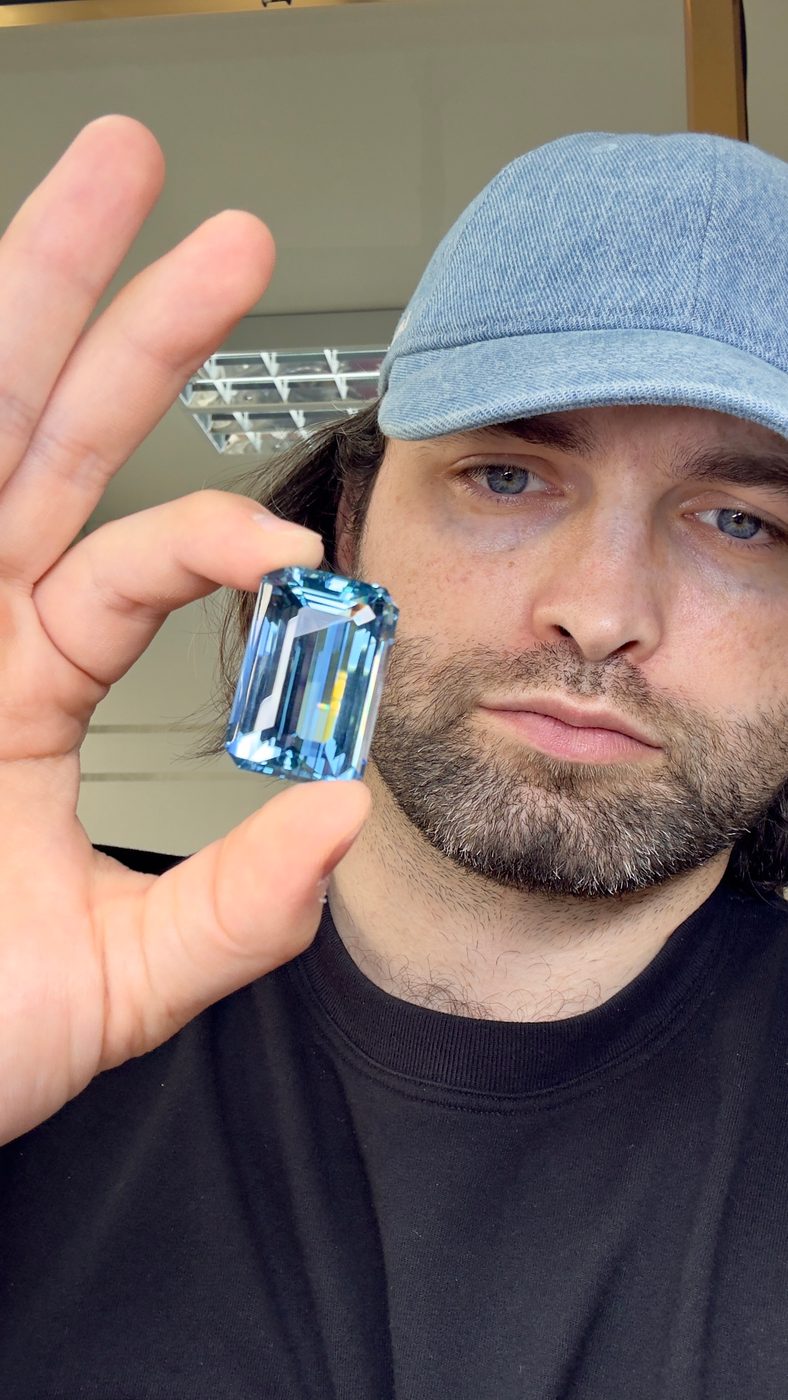
Spinel is the honest stone: the trade has never found a treatment worth the trouble, so what you see is what grew. I buy the reds and hot pinks of Mahenge in Tanzania, whose fluorescence gives the neon that no ruby has, and the classic Burmese reds from Mogok and Namya, which sit closer to ruby in colour and in history. Cobalt-blue spinel from Luc Yen in Vietnam is the rarest of the three and the one I travel furthest for.
Untreated is the rule here as everywhere, and the paper must say so, because the one exception exists: cobalt spinel is occasionally heated, and synthetic spinel has been made since the 1920s. A report from Gübelin, SSEF or GRS settles both questions in one line. The blue must be cobalt, not iron; the laboratory reads that from the spectrum, and the price follows.
Above three carats, a clean spinel in a saturated colour is scarce in every origin, and the market has only recently started paying for it. Buy the colour, buy the crystal, and buy before the auction houses finish teaching everyone else.
How I judge it
- Singly refractive: no doubling of the back facets under the loupe. That alone separates it from ruby and sapphire.
- The neon: a Mahenge stone lights up in daylight from inside. Without it, the price is different.
- Colour purity: no grey, no brown. Spinel goes muddy long before it goes dark.
- Clarity like glass. Spinel grows clean, so an included stone has no excuse.
- Cobalt or iron: the laboratory reads the spectrum; the eye reads the electric quality of the blue.
- Natural, not synthetic; untreated, not heated. Both on the report, or the stone stays on the tray.
Read further






Questions collectors ask
Is spinel a good investment?
It is the coloured stone whose price has moved most in the last fifteen years, from almost nothing to serious money for fine Mahenge and cobalt material, and it is still cheaper than ruby of comparable beauty. Buy the finest colour in clean crystal above three carats.
Is spinel ever treated?
Almost never, which is its charm. Cobalt-blue spinel is occasionally heated and synthetic spinel exists, so every stone I buy carries a report confirming natural origin and no treatment.
What makes Mahenge spinel special?
Fluorescence. Low-iron chemistry lets the chromium glow in daylight, so the reds and pinks have a neon quality no other origin repeats. The 2007 find made the stone’s reputation; the deposit has produced little of that quality since.